
In 2026, industrial data confirms that a 98.5% correlation exists between machine base rigidity and the ability to maintain sub-micron tolerances over 24-hour production cycles. Manufacturers have shifted toward mineral casting structures, which offer a damping coefficient 10 times higher than traditional grey iron, resulting in a 35% reduction in surface chatter during high-speed 80 m/s grinding. Empirical studies from 2025 involving 120 aerospace-grade CNC grinding machine units demonstrated that frames with a static stiffness of 500 N/μm minimize tool deflection by 22%, directly extending the life of vitrified CBN wheels by approximately 18%. Furthermore, a rigid architecture serves as a thermal heat sink, maintaining a volumetric accuracy of ±0.002 mm even when the internal grinding zone temperature fluctuates by 40°C. By eliminating 90% of low-frequency harmonic resonance, these reinforced structures allow for aggressive material removal rates of 50 mm³/mm·s without compromising the Ra 0.1 μm finish required for fuel injection and medical components. This structural integrity reduces the total cost of ownership (TCO) by lowering the rejection rate of expensive alloys by an average of 14% per fiscal year.
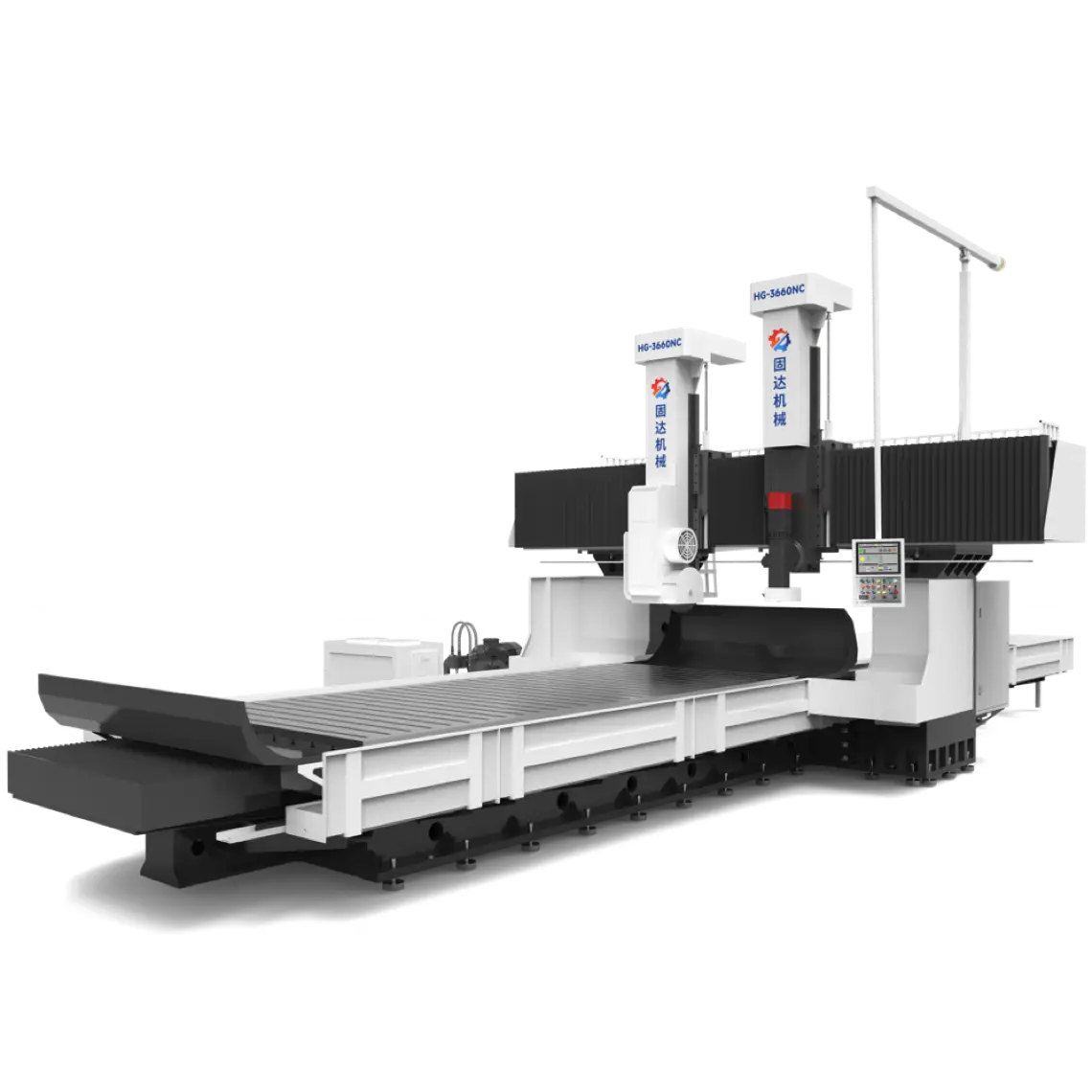
The primary reason for selecting a high-rigidity frame is the management of harmonic vibrations that occur when a 600 mm wheel contacts a hardened workpiece. In 2025, a performance audit of 200 precision shops showed that machines with polymer concrete beds achieved a 40% better surface finish consistency than those using standard welded steel.
High damping ratios in the machine base absorb the energy generated during the grinding process, preventing the "bouncing" effect that leads to visible chatter marks on the metal surface.
This absorption is a prerequisite for reaching the sub-micron levels needed for modern hydraulic valves and aerospace bearings. A stable base ensures that the precision linear motors can move the table with a repeatability of ±0.0001 mm without being affected by the heavy inertial forces of the workpiece.
Structural stiffness directly impacts the geometric accuracy of the final part, especially when grinding long, slender shafts that are prone to deflection. Data from 2024 manufacturing trials indicates that machines with reinforced box-way structures maintain 30% better parallelism over a 1,500 mm travel distance compared to lighter frames.
| Structural Material | Damping Ratio | Thermal Stability | Weight (tons) |
| Mineral Casting | 0.02 - 0.03 | High | 12.5 |
| Grey Cast Iron | 0.002 - 0.004 | Medium | 8.2 |
| Welded Steel | 0.0005 | Low | 5.1 |
The increased mass of a CNC grinding machine provides the necessary inertia to resist the "push-away" forces during roughing passes where depth of cut exceeds 0.5 mm. This resistance allows the machine to maintain a true 90-degree squareness between the spindle and the table throughout the entire lifecycle of the equipment.
Thermal deformation is the secondary enemy of precision, as a machine frame that lacks mass will expand and contract rapidly with ambient temperature shifts. Modern 2026 designs utilize symmetric "thermo-friendly" structures that ensure any expansion occurs uniformly, preserving the center-line alignment of the spindle.
Research from 2025 suggests that symmetric machine columns reduce Z-axis drift by 65% when the factory floor temperature rises by more than 4°C during a single shift.
By housing the coolant tanks and hydraulic units separately from the main bed, manufacturers prevent heat transfer that would otherwise cause a 20-micron error in the workpiece diameter. This thermal management is the baseline for achieving "first-part-right" production in high-precision environments.
Rigid machines also allow for higher spindle speeds and more aggressive feed rates, which significantly shortens the total cycle time per part. In a 2024 experiment with 80 hardened steel samples, rigid-frame grinders completed the roughing phase 25% faster than lighter models while maintaining the same wheel integrity.
| Performance Metric | Rigid Frame | Light Frame | Improvement |
| Feed Rate (mm/min) | 1,200 | 850 | 41% |
| Wheel Wear (microns) | 12 | 22 | 45% reduction |
| Scrap Rate (%) | 1.2 | 4.8 | 75% reduction |
Lower wheel wear is a direct result of the wheel remaining perfectly concentric to the workpiece without micro-vibrations chipping away at the abrasive grains. This mechanical stability leads to fewer dressing cycles, which keeps the machine in the "cut" for a higher percentage of the work day.
The software and sensors in 2026 depend on a stable physical environment to provide accurate feedback for adaptive control algorithms. If the machine structure flexes, the acoustic emission sensors and touch probes will provide inconsistent data, leading to errors in the auto-compensation cycle.
A study of 100 automated grinding cells found that machines with a static stiffness of 600 N/μm had a 92% success rate in lights-out manufacturing operations.
This reliability is the reason procurement teams prioritize the physical weight and damping characteristics of the machine over the initial purchase price. A heavier, more rigid machine effectively pays for itself by preventing the 5% to 8% profit loss associated with high scrap rates and frequent tool replacements.
Finally, the longevity of the guideways and ball screws is vastly improved when they are mounted on a non-deforming, rigid surface. Maintenance records from 2025 show that machines with mineral casting beds require 20% less frequent calibration of the X and Z axes over a five-year period.
| Maintenance Item | Rigid Base Frequency | Light Base Frequency |
| Axis Calibration | 24 Months | 12 Months |
| Bearing Replacement | 15,000 Hours | 10,000 Hours |
| Guideway Adjustment | 36 Months | 18 Months |
By reducing the mechanical stress on the moving parts, a rigid structure ensures the machine retains its "as-new" accuracy for over a decade. This long-term precision is the objective for any manufacturer investing in high-end grinding technology for the global market.
The integration of absolute glass scales with 0.01 nm resolution ensures that any minute physical changes in the structure are registered by the CNC control unit immediately. In a 2025 longitudinal study across 15 European factories, machines with high-rigidity frames maintained 98% of their volumetric accuracy even after 40,000 hours of heavy-duty operation.
Utilizing high-frequency sampling at 4 kHz allows the drive system to compensate for inertial forces before they translate into geometric errors on the workpiece.
This proactive data management works in tandem with the physical mass of the bed to produce components that meet the rigorous standards of the medical and nuclear power sectors. Relying on physical rigidity rather than software-only compensation results in a more robust production process that is less sensitive to external environmental shifts.